
Gardening is such a wide topic that it can feel completely overwhelming. Maybe so much so that you put off trying? I’ve been there. It’s a lot, I know, but I also know that you can totally do it. Here I lay out an overview of the basics to help simplify all information and questions you may have on getting started. So grab a pen and a notebook and let’s get started!
1. How to pick what to grow
Learning how to choose the best plants for you can be quite a task in and of itself! It’s easy to get caught up in the excitement of it all and buy too much, or get caught up in over analyzing and never buy anything (I’ve done both).
There are a few main questions to ask yourself:
1. What growing zone do I live in?
2. What produce do I typically buy and use? + What sparks joy for me?
3. What kind of space do I have?
What growing zone do I live in?
Finding your growing zone is essential to having a successful garden. Your zone will define your climate, length of growing season and more. So how do you find this? It’s really as simple as searching what your area’s zone is. For example, I typed into the search bar, “Northwest Ohio growing zone”.
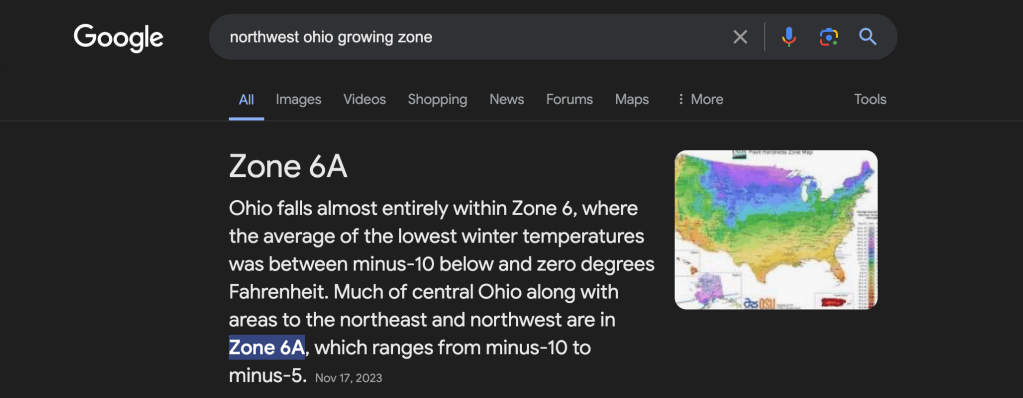
Now that I know I live in zone 6A, I can now dive into all the information needed to grow in my specific area, such as frost dates, length of growing season and what plants thrive (and don’t) in your area. Based on my area a lemon tree would not do well for me, but an apple tree would thrive! This a super simple way to narrow down the possibilities that feel quite overwhelming.
What produce do I typically buy? + What sparks joy for me?
Another aspect to think about is what do you and your family eat a lot of. If you’re going to spend the time and effort growing your own produce, you’ll want something that you love and are familiar with using already. This will also build confidence as you’re fumbling through your first growing season. In addition to this, start thinking about what sparks joy for you. What is just purely beautiful to you? For me this is flowers. Though they do have many uses, the main reason I started planting them was because they brought me joy. They make my gardens and home beautiful and inviting. Trust me, it’s well worth it!
what kind of space do I have?
This is an entire section of gardening that I will dive much deeper into in the future, but for now I want to encourage you. If you live somewhere where you have little to no space, like an apartment with a tiny balcony, YOU CAN GARDEN. You will have to get creative and maybe adjust your ideas of what your garden looks like exactly, but I assure you, space does not have to stop you. In coming blog posts I will talk more about container gardening and vertical gardening which can be key ways to grow some of your own food.
“To plant a garden is to believe in tomorrow.”
– Audrey Hepburn
2. Where do i source my plants?
When you’re just entering into the gardening world, my best advice is to keep things simple at first. Learning new things can be overwhelming or frustrating and sometimes a lot of that can come from us jumping too far too fast (guilty as charged). Taking baby steps and slowly building on a solid foundation has proven to benefit me most.
With that said, there are two main avenues you can choose from: seed starting or buying starts.
Starting plants from seed is a great option for avid or a tad more experienced gardeners. After gardening for a few years it ends up being a cheaper option (once the upfront costs are spent). Seeds are more bang for your buck and you have the ability to choose more varieties of plant, as well as having heirloom varieties accessible to you.
Buying starts in the long run may cost you a bit more money, however skipping the seed starting makes the new gardener life so much more simple. This allows you to spend more time and mental energy on getting your bearings on the basics of caring for each plant and using the produce you’ve now grown. Big box stores like Walmart have greenhouse sections that may have some good options for you to choose from; however, I have always had the best luck at local greenhouses. Not only do they tend to have better quality starts, but supporting local businesses is something that’s important to our family.
Ultimately, choose whatever option you feel best works for you and your situation. Gardening is an art that everyone does a tad (or a lot) differently!
3. Growing requirements
Growing requirements are also a pretty wide subject in gardening; there are many requirements and all of them depend on your location and each plant itself. So, where do we start?
Let’s start with when to plant:
+ The summer garden generally starts in early spring. How early in the spring will depend on the plant and if you’re starting from seed or buying starts from the store or local greenhouse.
+ The fall garden should be planted approximately mid summer (again this does depend on your zone).
Next, you’ll need to know each plant’s requirements for sunlight, water, space, planting depth, days til’ maturity/harvest. This in and of itself is a huge amount of information and can feel so overwhelming. (Take a deep breath!) All this information is easily accessible! If you buy seeds, the information will be on the back of the seed pack. If you buy starts from a greenhouse, each one should have a small tag with all its main requirements. And if either of those fail you, a quick search will give you all that information and more, just make sure the source is credible!
Sooooo that was a lot to take in! It always feels like a lot when it’s new; some day this will all be second nature you. Trust me 😉 But for now, Write out all the information you gather from the questions above and use it as a guide for planning your amazing garden! I hope this was helpful Please feel free to comment or email your questions and I will do my best to get you answers!
Cheers, my friend, until next time.
Erin


 The Simple Pursuit Mama
Leave a comment