
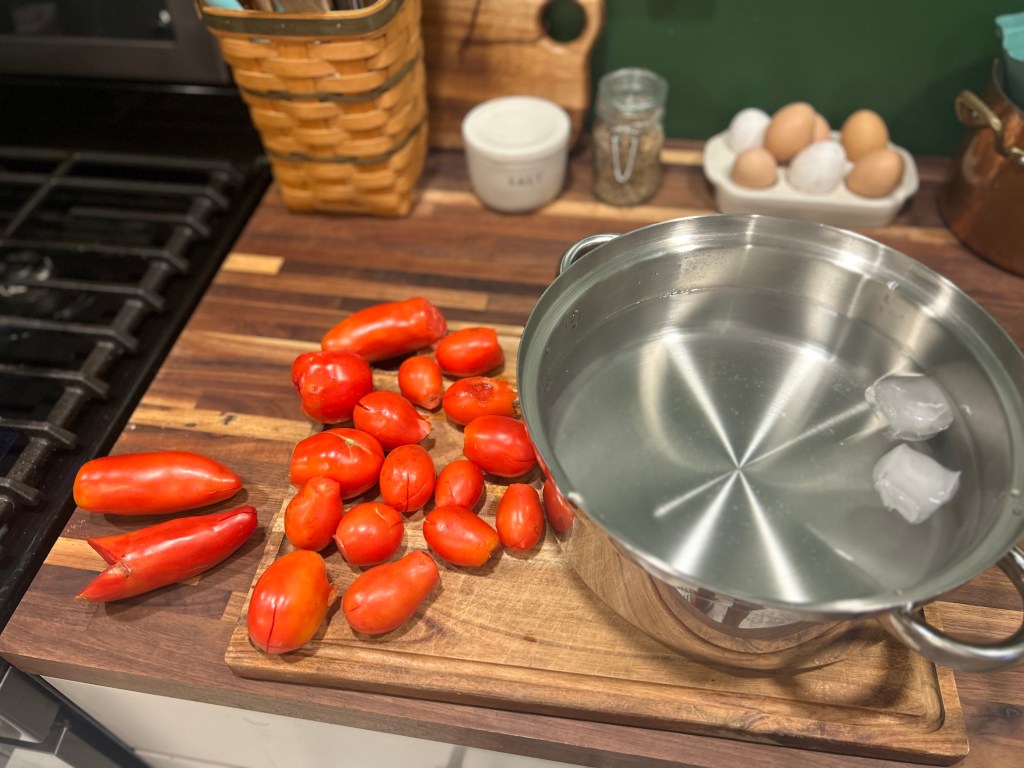
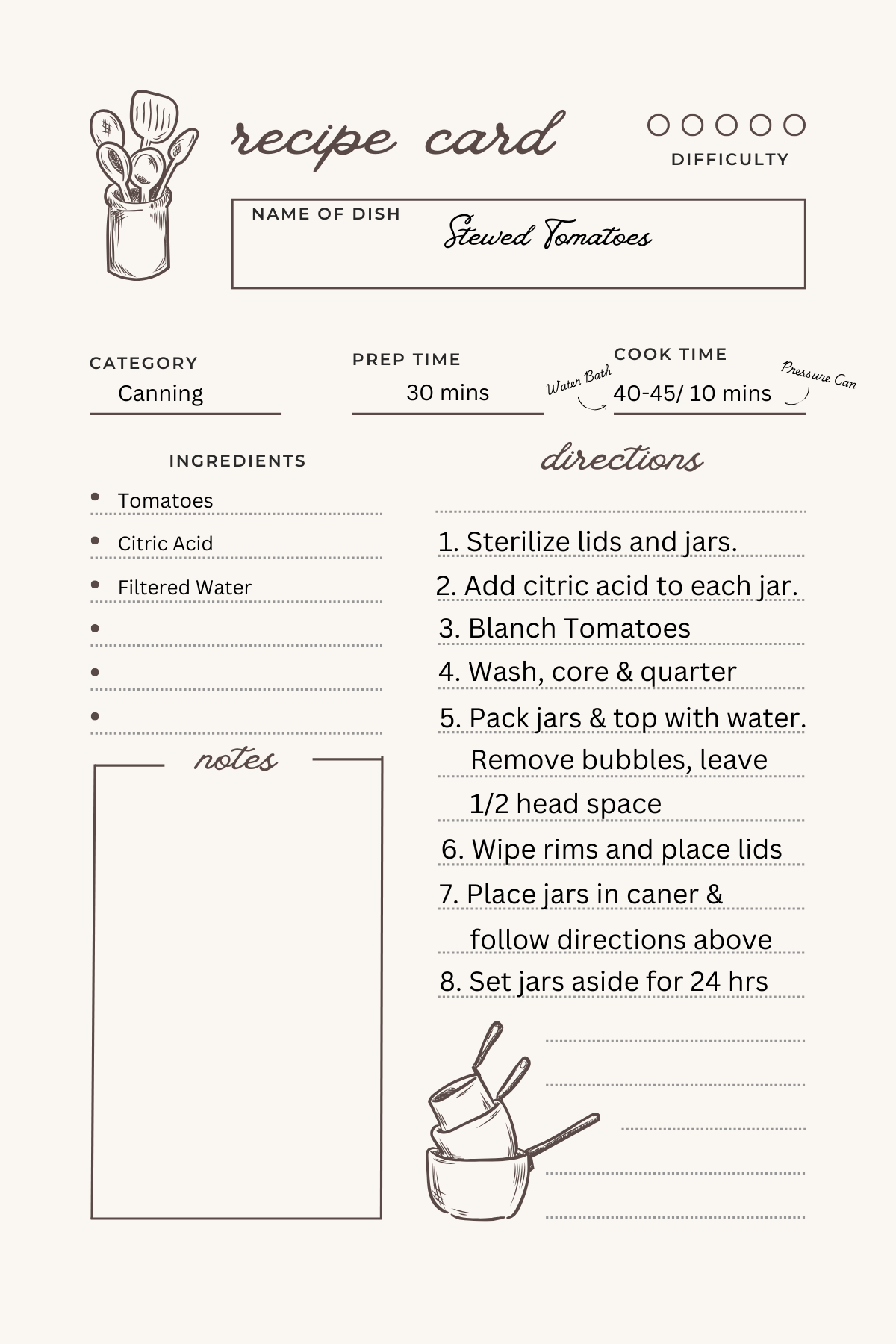
One of the best and easiest ways to preserve your home grown tomatoes is to can stewed tomatoes! What are they and why are they worth it? Great question, I’d love to tell you! 😉 Stewed tomatoes are skinned, quartered and canned in water. They are fantastic for chilli, any winter soup, casserolles and more. They are a pantry staple for us every winter! Once you’ve done the process once or twice you’ll be able to do it in your sleep. Below are the detailed steps along with a recipe sheet to download!
Tips
- Keep things organized! Set up stations for each step if its helpful.
- Give your tomatoes a little squeeze to get the extra juice out before you pack your jars. This may not be necessary for fresh paste tomatoes, but is very helpful for slicers or frozen (and thawed) tomatoes.
- Tomatoes toeing the line of good or gone bad? Take the extra step and time to thoroughly check each tomato as you chop them. Most of it fine, but find a bad spot? Just cut it out and can the good part!
Tools
- A canner: water bath or pressure canner
- Sterilized Jars: pints or quarts
- New lids
- Clean rings
- A clean rag
- Jar tongs
- A timer
Ingredients
- Tomatoes
- Citric Acid (or lemon juice)
- Water: use filtered water! I have made the mistake of using tap water and it affected the flavor of every jar so much.
Canning Safety
- Make sure all your jars and lids have been washed with hot, soapy water.
- To prevent your jars breaking, fill your water with a similar water temp as the water you’re filling your jars with. Mostly just make sure you aren’t putting hot jars into a canner filled with cold water.
- Make sure that your water is to a rolling boil/up to pressure before you start the timer.
Steps
Step 1. Sterilize Jars and lids
There are many ways to sterilize your jars, lids and rings, but I find the easiest way is to wash them by hand thoroughly with soap and hot water.
Step 2. Add in Citric Acid
Grab your jars and put the appropriate amount of acid (or lemon juice) in each jar. I do this all at once so I never have to guess if I put it in this jar or that jar or all, etc. (insert stressed emoji)
For pints you will add in ¼ teaspoon of citric acid. For quarts add in ½ teaspoon of citric acid.
Step 3. Prep for Blanching.
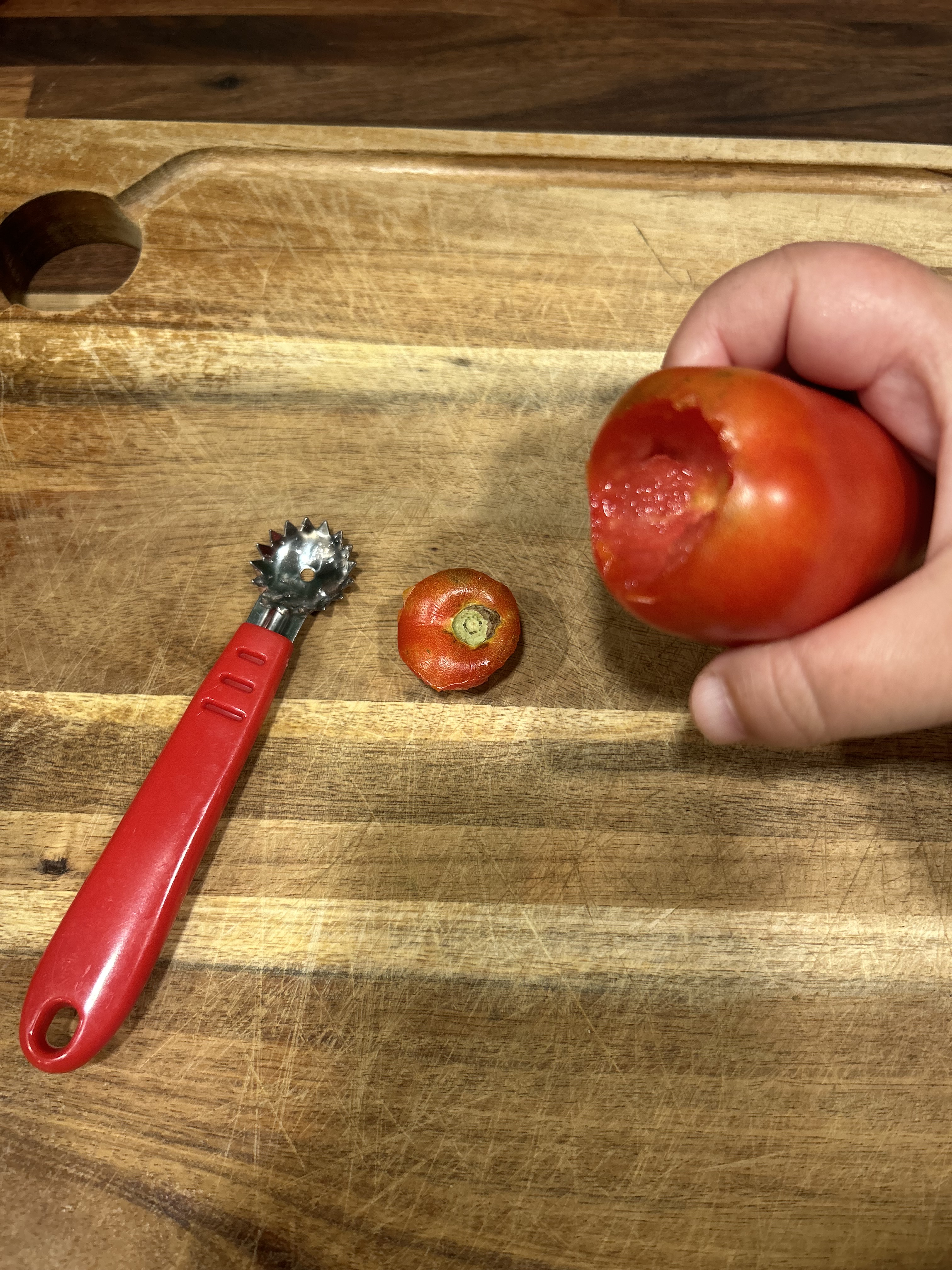
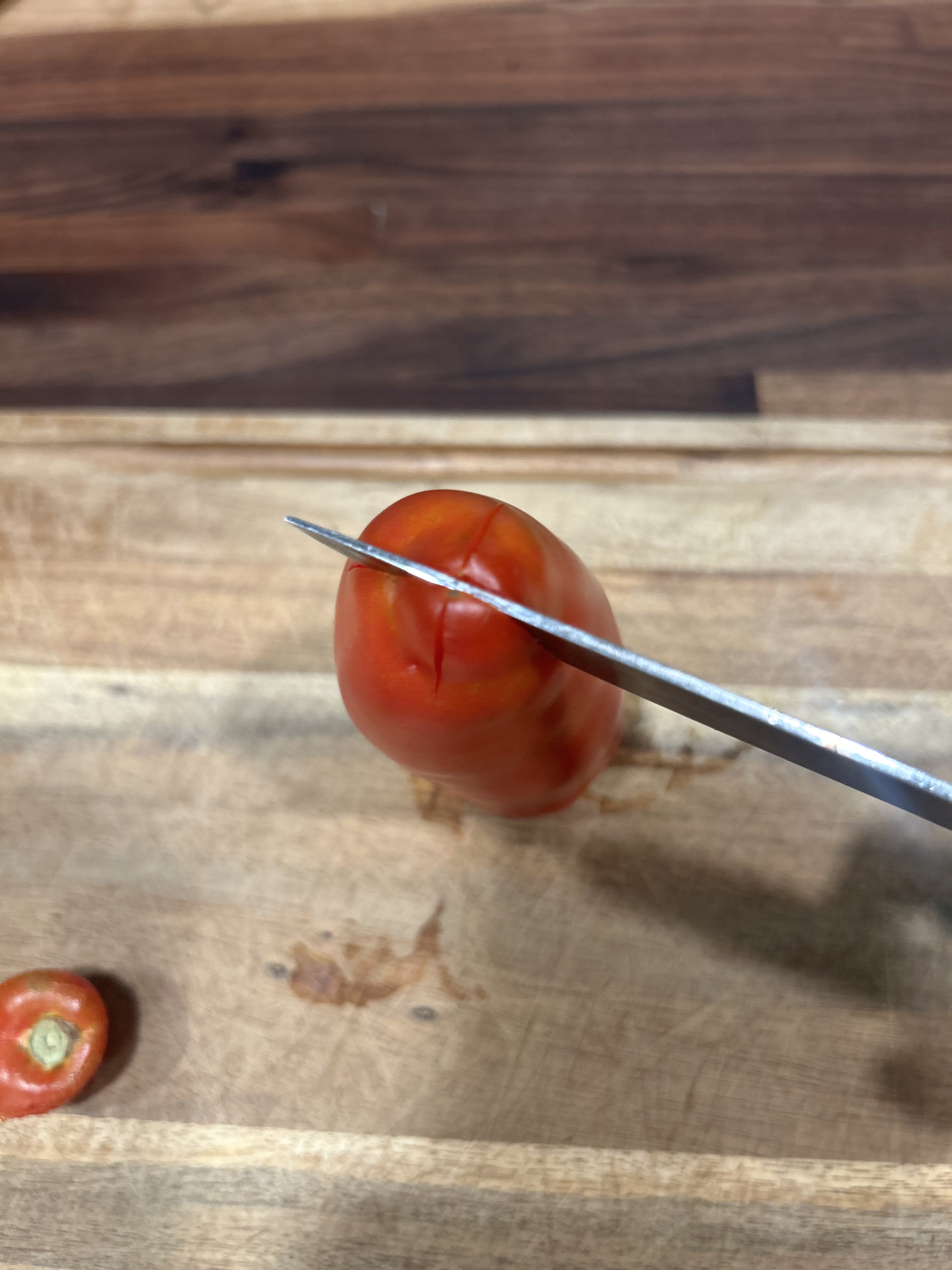
Start by giving your tomatoes a good rinse. Next, check for bad spots, if there are any, simply cut those out and toss them to the side. Then, core them and slice an X on the bottom.
Step 4. Blanch the Tomatoes
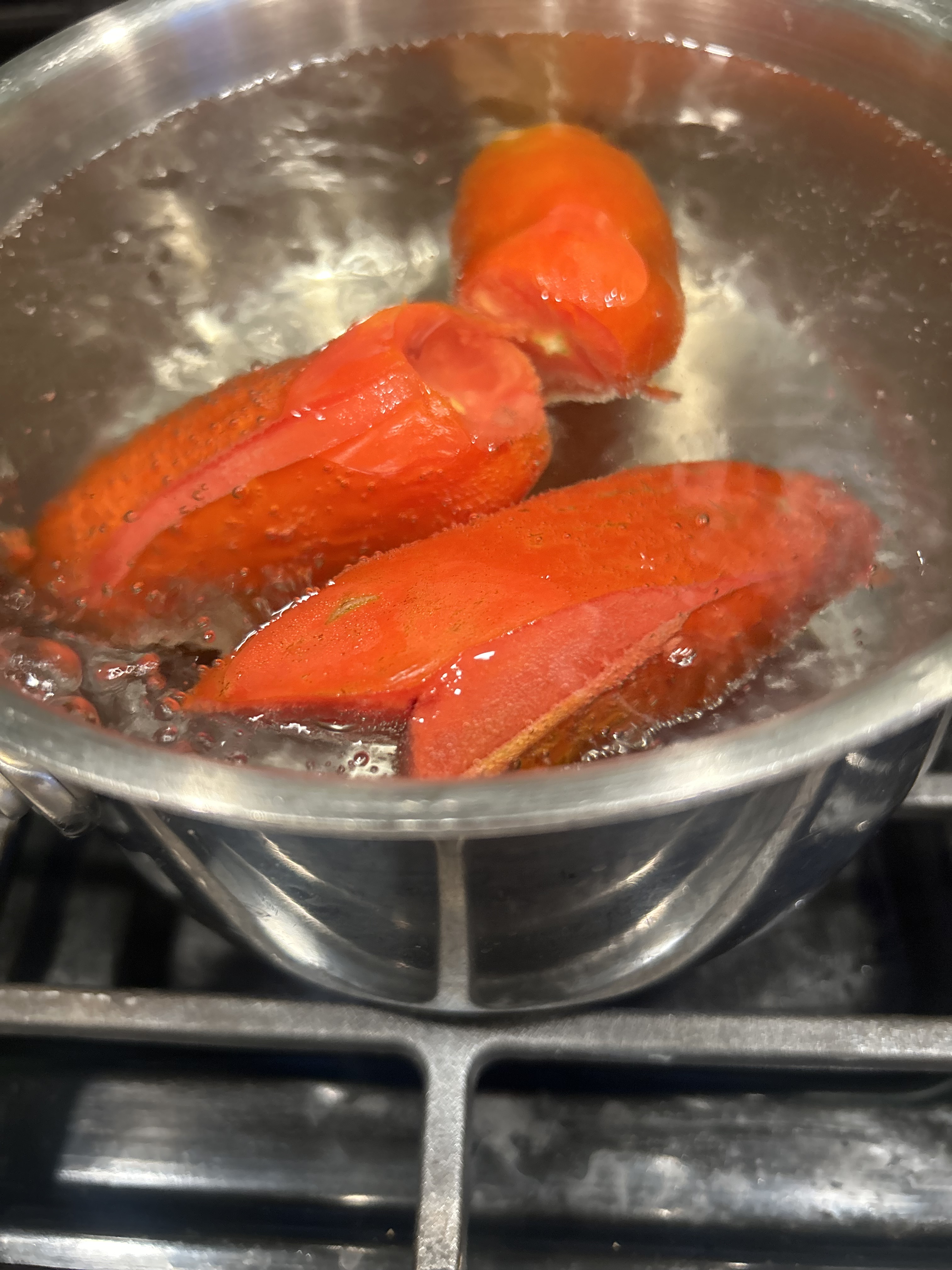
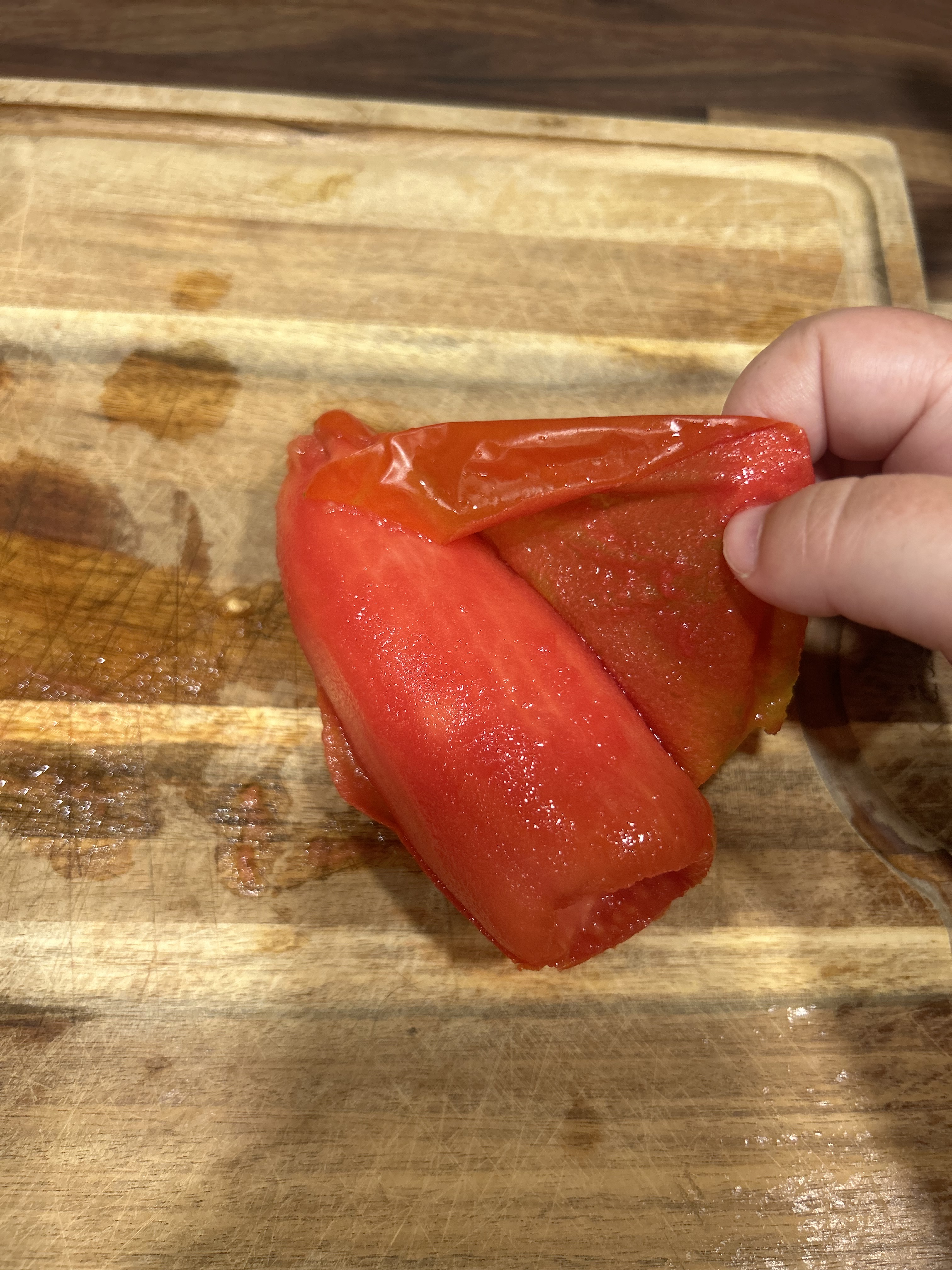
To blanch your tomatoes simply start by boiling a pot of water. Next, Get an ice bath ready. Then, an X in the bottom of the tomato. Place each tomato in the pot for 5 ish seconds or until you start to see the skin peel back. Next, place them into the ice bath to shock them and stop the cooking. Finally, opal back the skins of the tomato, more times than not the skins slip right off for me. If peeling is difficult, they weren’t blanched quite long enough. After pulling the skin off, quarter or dice them.
Step 5: Pack the Tomatoes
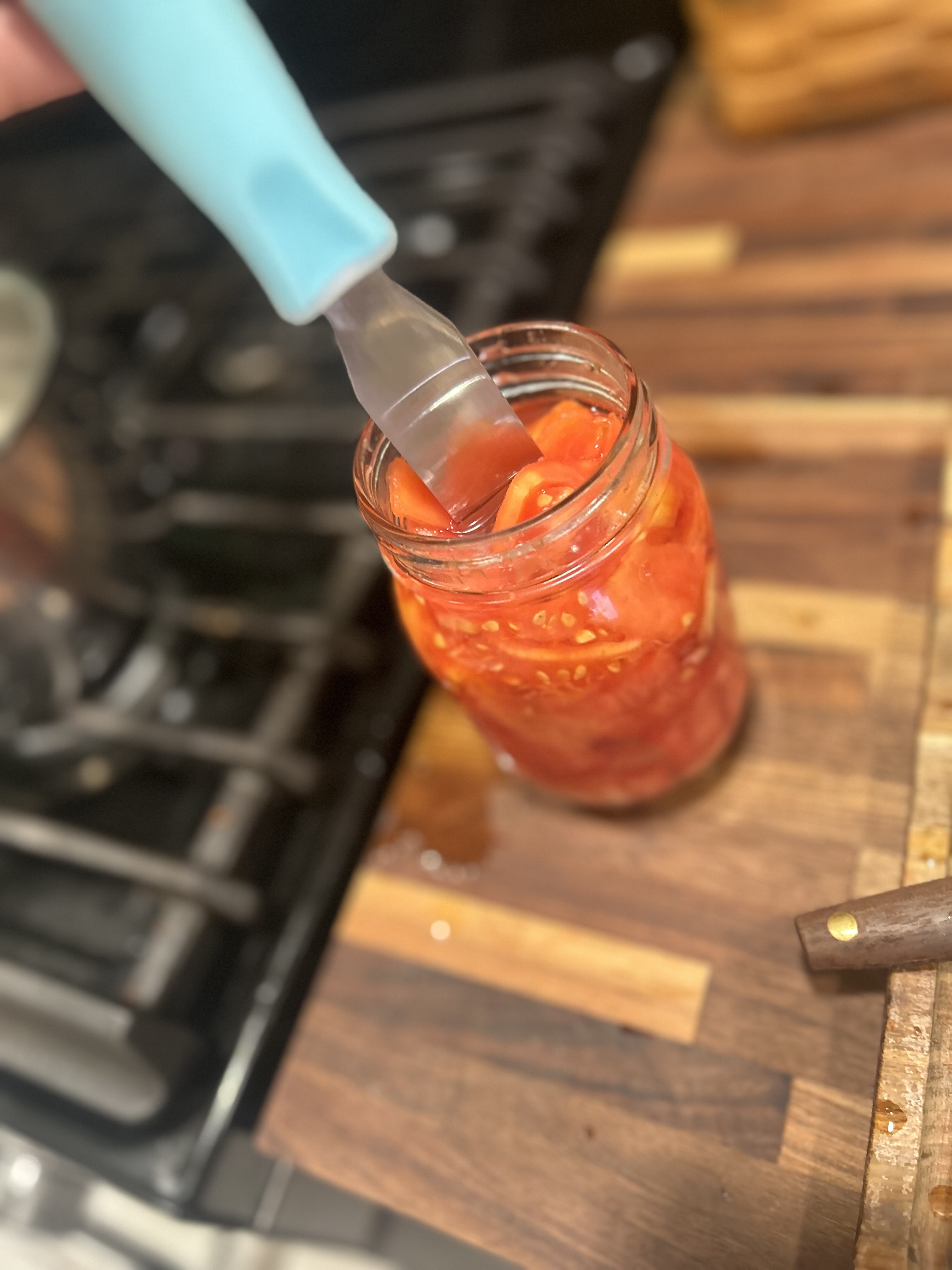
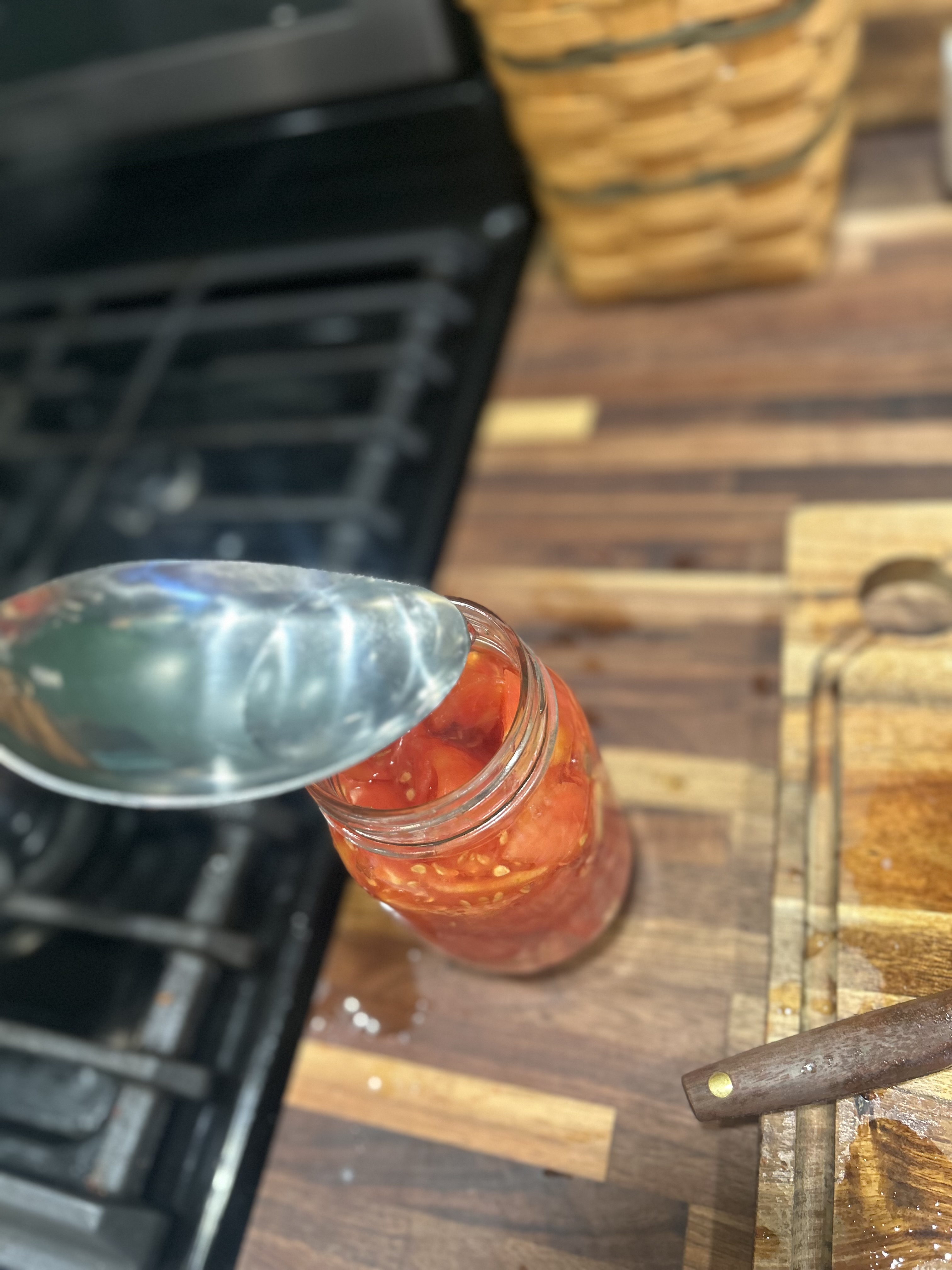
Simply pack the tomatoes as tightly as possible until you are left with ½ inch headspace ( the space from the tomato level to the rim of the jar). All canned fruit needs to be submerged in water, so depending on how juicy your tomatoes are, you may need to top them off with some hot water. Lastly, take a butter knife to remove bubbles from the jars.
Step 6: Wipe Rims and Place Seal
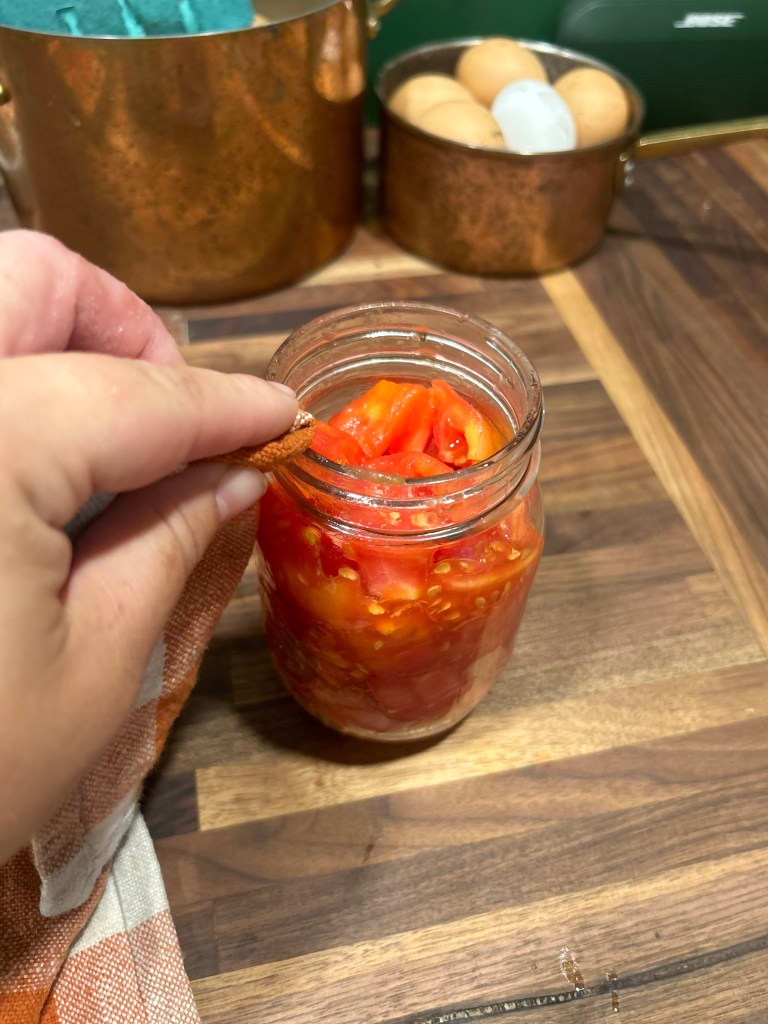
Simply take a wet corner of the rag to wipe the rims well, using a new corner or spot of the rag for each rim. Some people wet the rag with distilled vinegar. Next, place the lid and ring on each jar, tightening only to finger tightness.
Step 7: Place in Canner
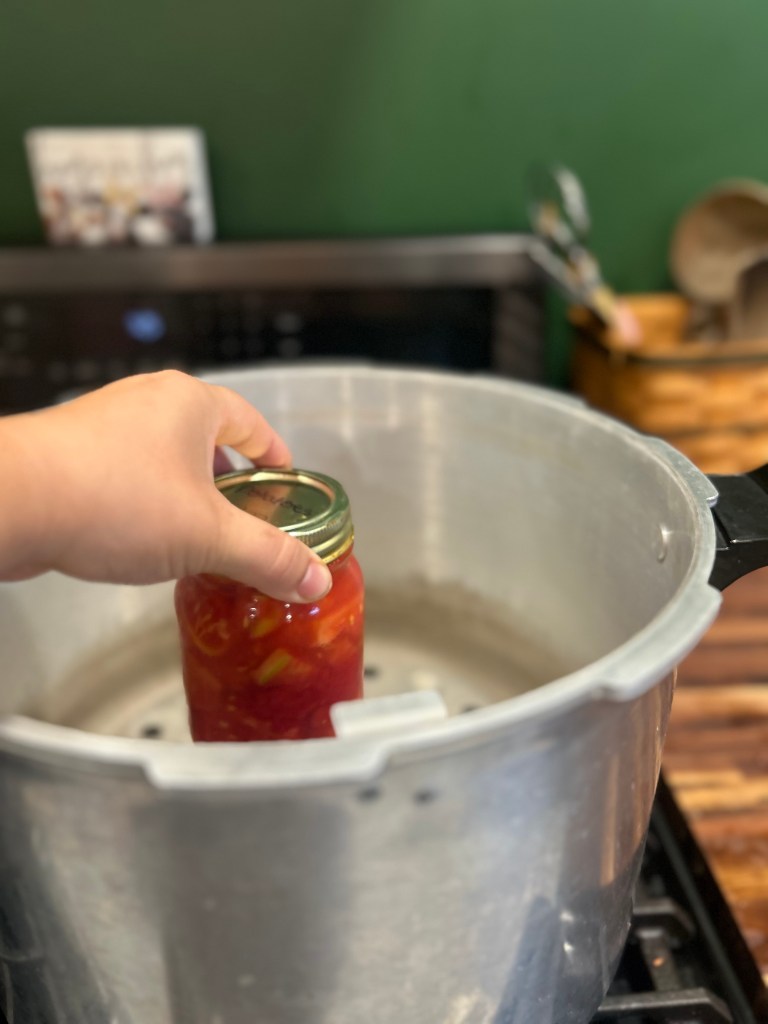
Fill your canner with your jars.
Waterbathing: Fill the canner with warm water, covering the jars one by one inch. Bring to a rolling boil and set your timer for (pints) 40 minutes or (quarts) for 45 minutes. This time is longer if your altitude is above 1,000 feet.
Pressure Canning: Fill the canner with water about a quarter of the way. Lock on your lid and allow your canner to vent for 10 minutes; make sure the pressure button is popping up. Place the weight over the vent and bring the canner up to 10 pounds of pressure. Set your timer for 10 minutes. Once your timer goes off, turn off your burner. Wait for the canner to naturally release most of the pressure, then open the vent. One the pressure is at zero take the lid off and pull your jars out with the jar tongs.
Step 8: Set Jars Aside
Set your jars aside on a towel and leave them for 24 hours. After 24 hours check the lids to make sure they don’t pop up/down when you put pressure on them, take the rings off, and give the jars a quick wash. This prevents stickiness and funky growings on the outside of your jar. Finally, label them with the month and year and store!
Let me know in the comments how yours turned out or if you have any questions!
Cheers, my friend, until next time,
Erin
 The Simple Pursuit Mama
Leave a comment